
The Gallo-Roman remains
Artefacts that bear witness to everyday life
Following Vercingetorix’s defeat, the oppidum of Alesia was not destroyed and remained inhabited. During the 1st century AD, a prosperous Gallo-Roman town developed, following the model spread by Rome throughout the Empire, thanks in particular to the work of craftsmen specialising in bronze work. The population at that time is estimated to have been a few thousand people.
All that remains today of this ancient city, which was abandoned in the 5th century, are levelled ruins. These consist of the foundations and buried structures of the monuments and dwellings built over several centuries.
After being abandoned, the city became a stone quarry and its various buildings were dismantled over the centuries, partly to make way for the present-day village of Alise-Sainte-Reine, situated on the southern slope of the hill.
As you wander through the ancient streets of these ruins, situated 3 km from the Museum, you can get a real sense of the daily life of its inhabitants.
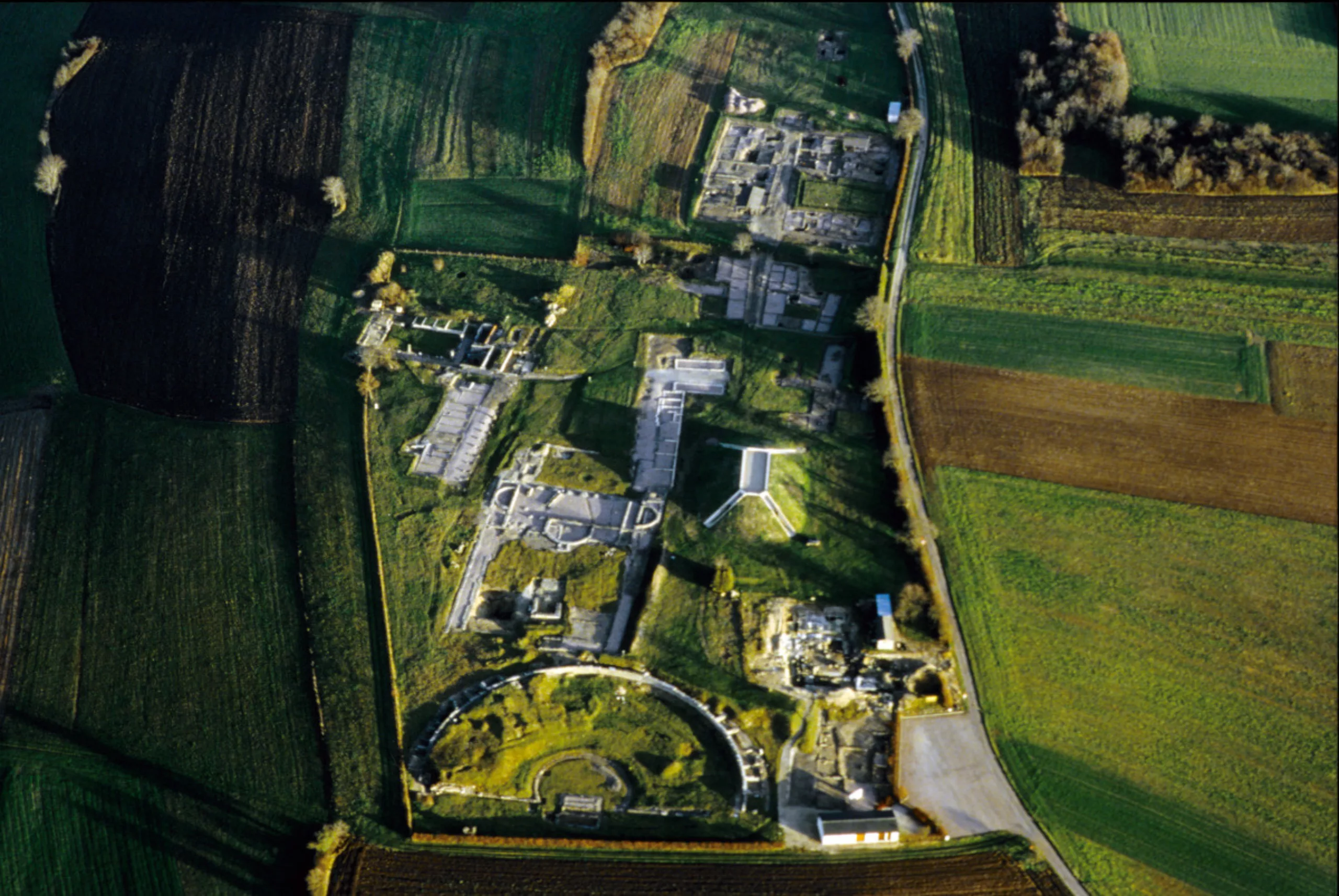
The theatre
It dates from the second half of the 1st century AD and could seat around 5,000 spectators, seated on tiers that have since disappeared.
The temple
Undoubtedly dedicated to Jupiter, it is the city’s main sanctuary. Surrounded by its sacred precinct, it is situated within an enclosed area where religious ceremonies take place.
The Civil Basilica
Built in the 2nd century AD, it consists of a large rectangular hall and semi-circular apses which housed meeting places for the courts and the local administration.
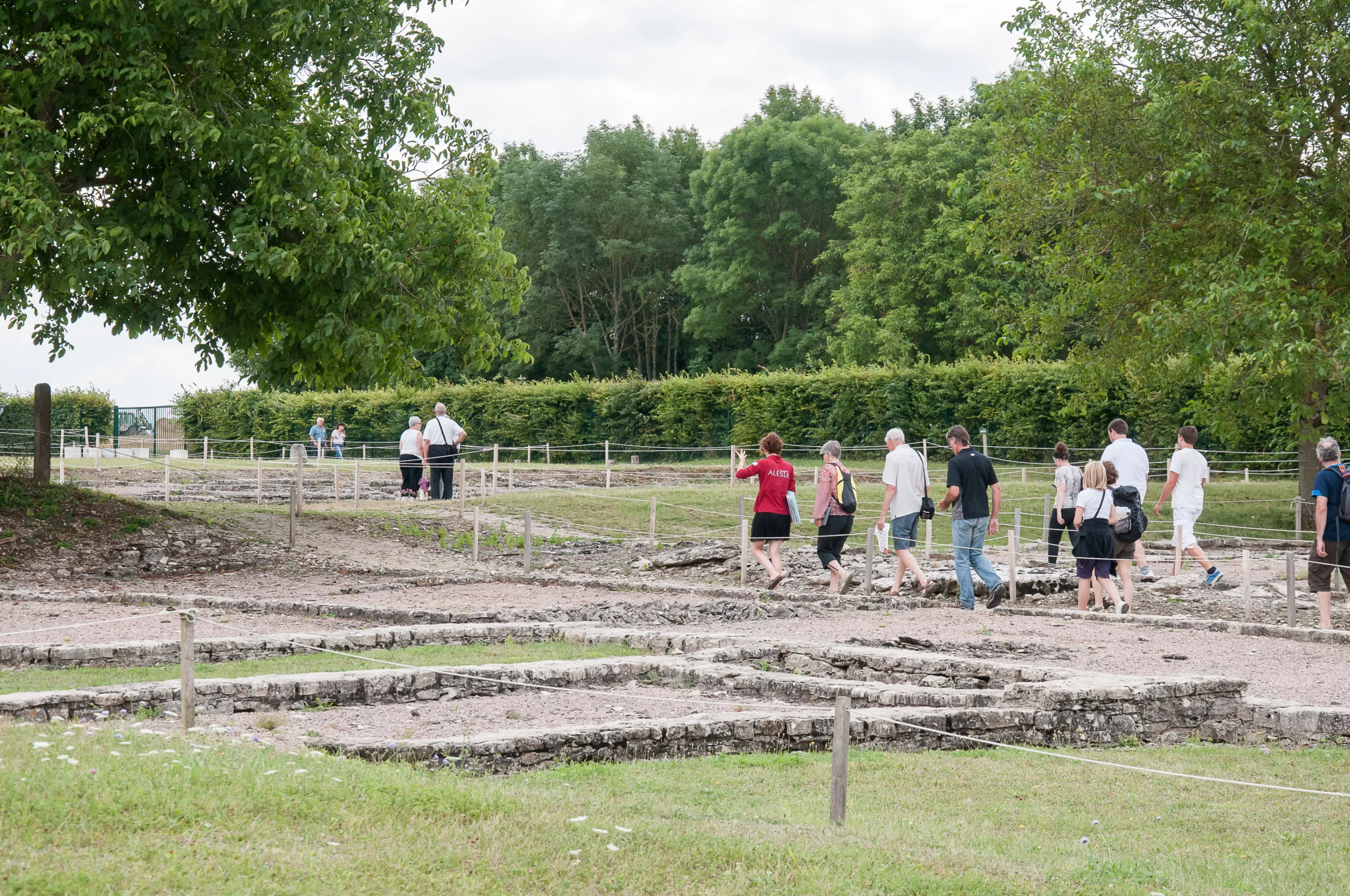
The public square
This central square serves as a meeting place and market.
The D’Ucuetis Monument
This is the building of the metalworkers’ guild and the sanctuary of their guardian deities.
The craft and residential quarters
Here you can see the cellars beneath the houses, the cobbled streets and the wells that provided the water supply.
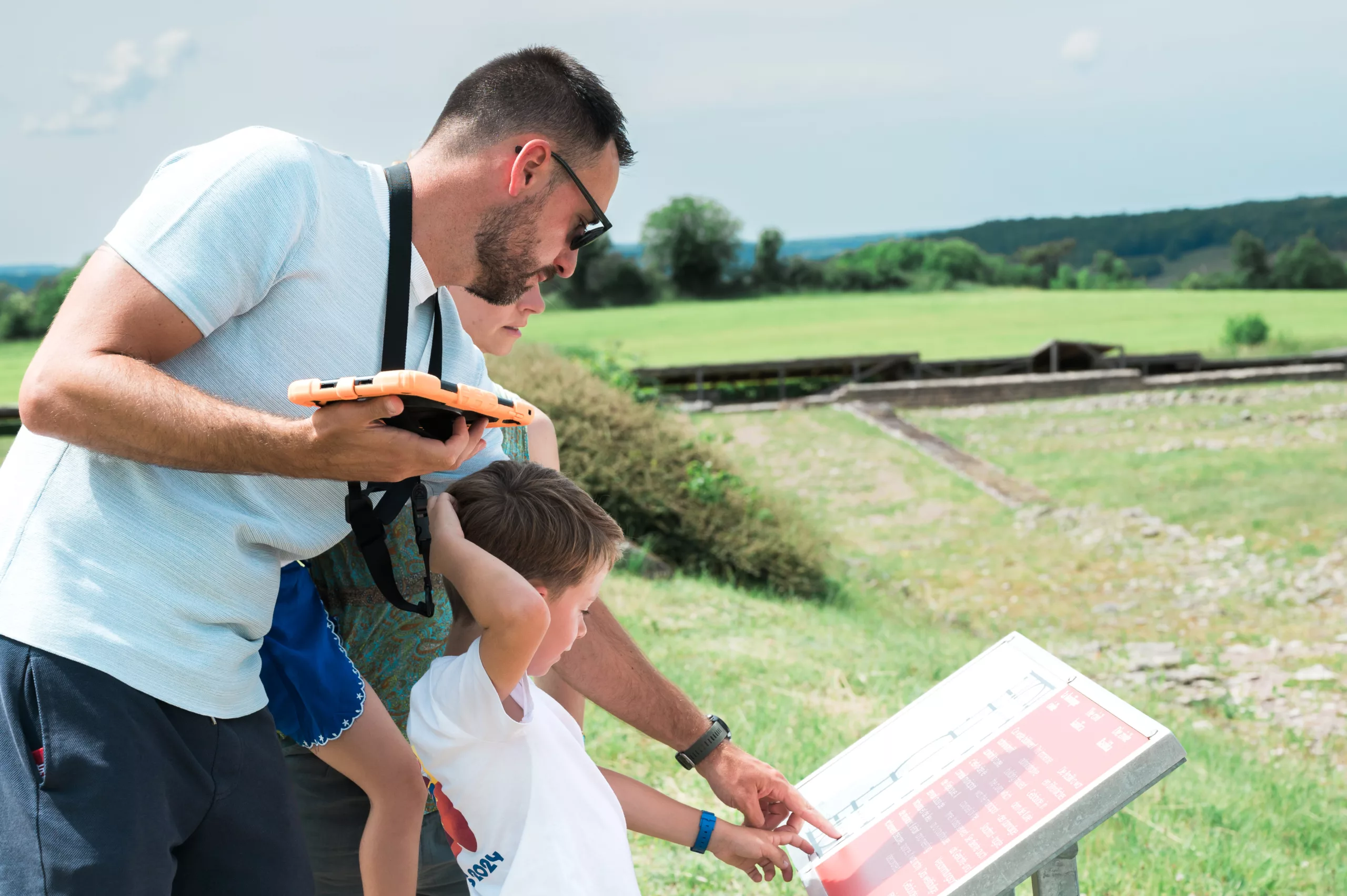
The Four Seasons of Alésia
With a tablet in hand, set off to explore the ruins and step back in time to discover Gallo-Roman Alésia as you’ve never seen it before!
You’ll wander through its streets, discovering its architecture, urban layout and the daily lives of its inhabitants! At each stop, a family-friendly game will introduce you to archaeological techniques: you’re the archaeologist!