History of the site
Prehistory
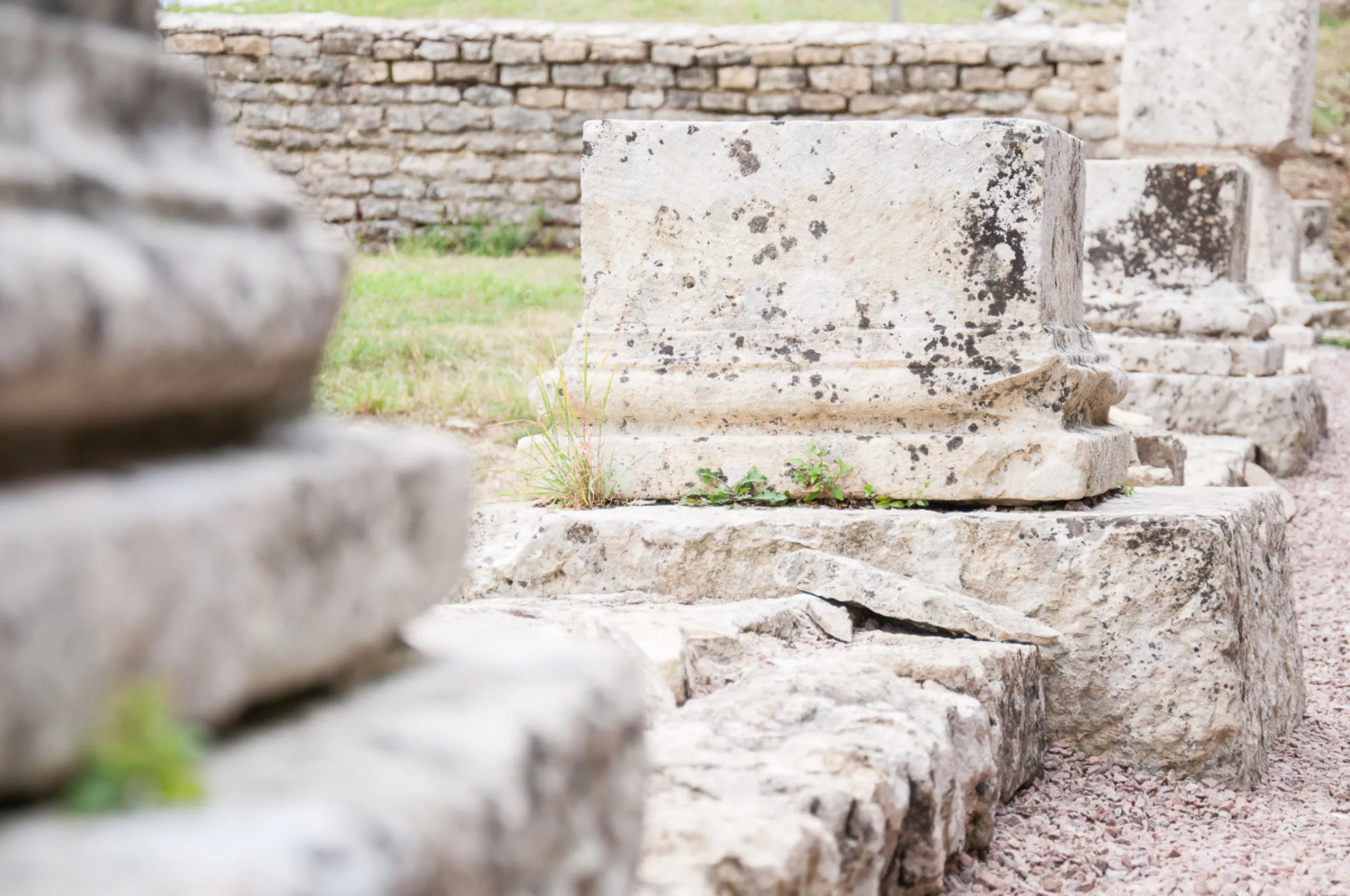
The history of Alesia does not begin with the battle of 52 BC. Mont-Auxois and its surroundings have yielded evidence of earlier settlements: an early rampart and burial sites dating back to the Neolithic period and, from the subsequent era, a series of finds (hoards of metal objects, cemeteries) show that the future site of Alésia was, as early as the Bronze Age (2300–800 BC), an area prized by a warrior aristocracy.
The Gallic period
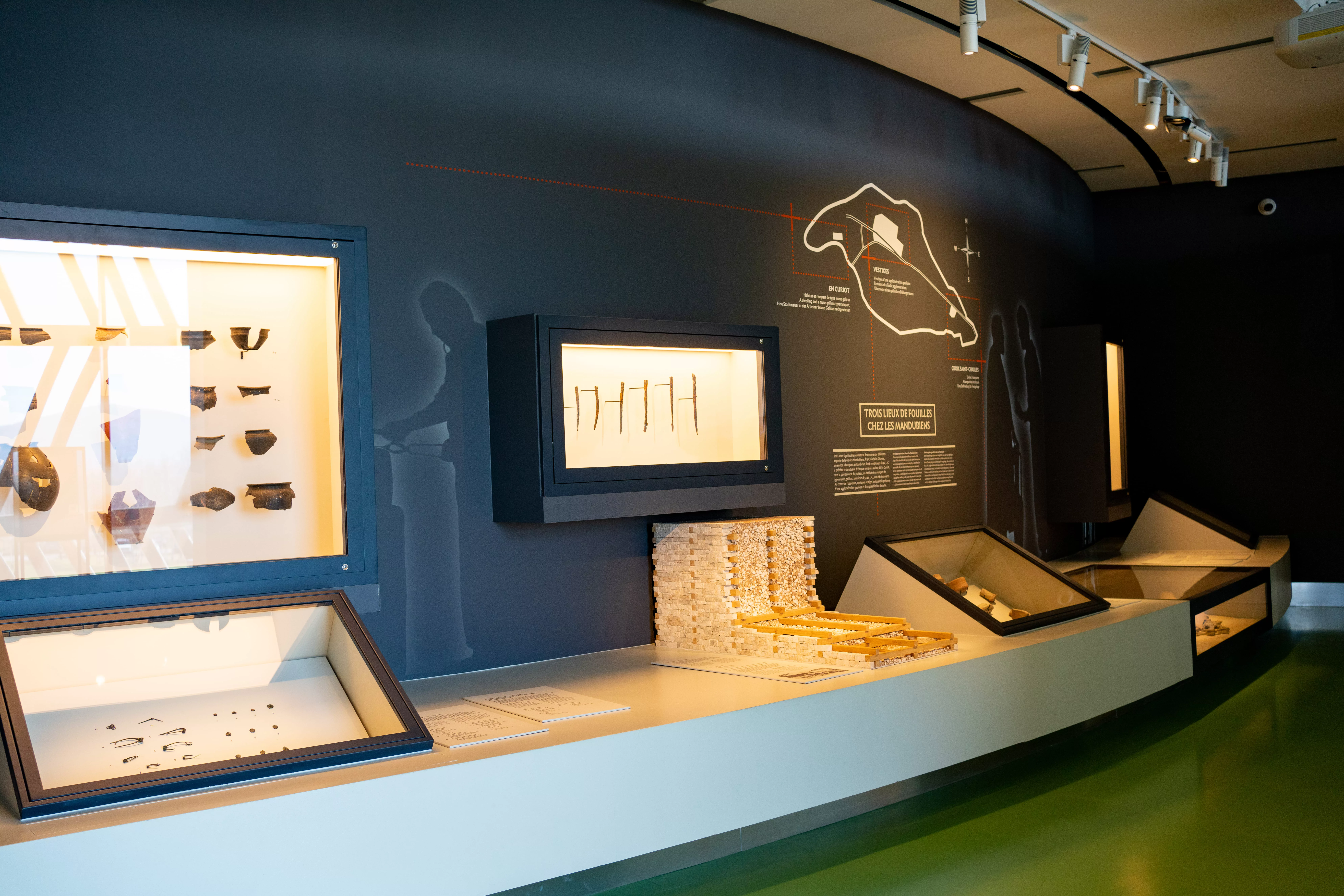
Towards the end of the 2nd century BC, Mont-Auxois became the main oppidum (fortified settlement) of the Mandubian Gauls, at a time when all Gaulish tribes were establishing similar sites. Archaeological evidence allows us to paint a general picture of this Gallic town: a settlement defended by a Gallic-style rampart, a centre for craft production (pottery, metalworking), a site likely to have included places of worship, and a venue for political gatherings and banquets.
52 BC, The Siege of Alesia
During the summer of 52 BC, the Gallic army led by the Arverni chieftain Vercingetorix took up position in the oppidum of Alesia, with the aim of putting Caesar’s army under pressure. Indeed, the Roman general, having been driven back from Gergovia a few weeks earlier, abandoned plans to storm the town of Alesia and decided instead to lay siege to it. For several weeks, tens of thousands of combatants then clashed. Archaeological research carried out at the site has uncovered significant remains of the Roman siege fortifications, as well as hundreds of items of Roman and Gallic equipment, enabling us to reconstruct this event of extraordinary significance.
The Gallo-Roman period
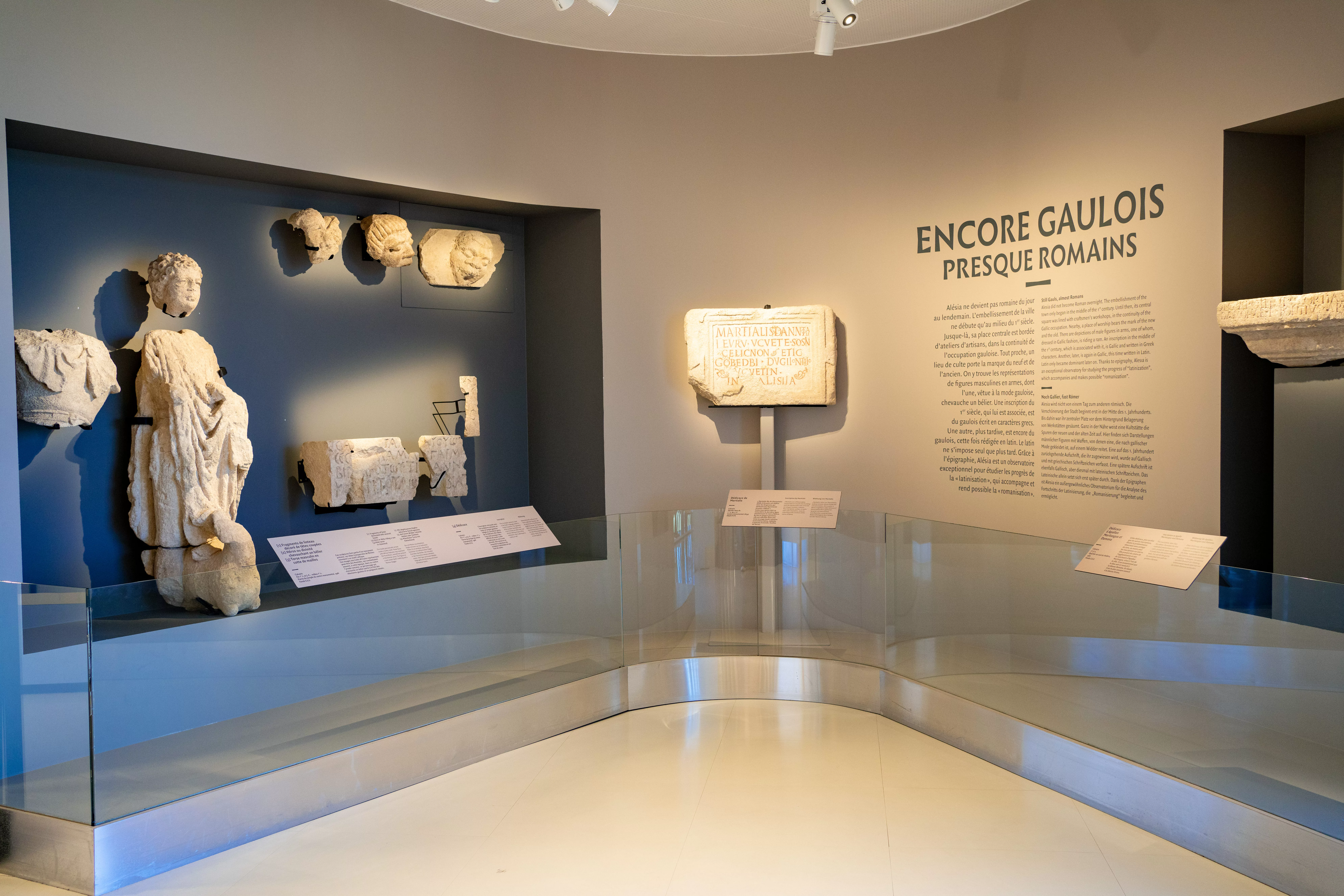
After Caesar’s armies had departed, the Gallic oppidum came back to life and gradually transformed. A monumental centre was developed: it comprised the main buildings found in Roman towns, thereby signalling the integration of the local populations into the Roman Empire and its civilisation. There were many craftsmen there, who grew wealthy and helped the town to flourish thanks to their remarkable technical skills, particularly in bronze working, whilst a large place of worship dedicated to Apollo developed on its outskirts.
Early Middle Ages
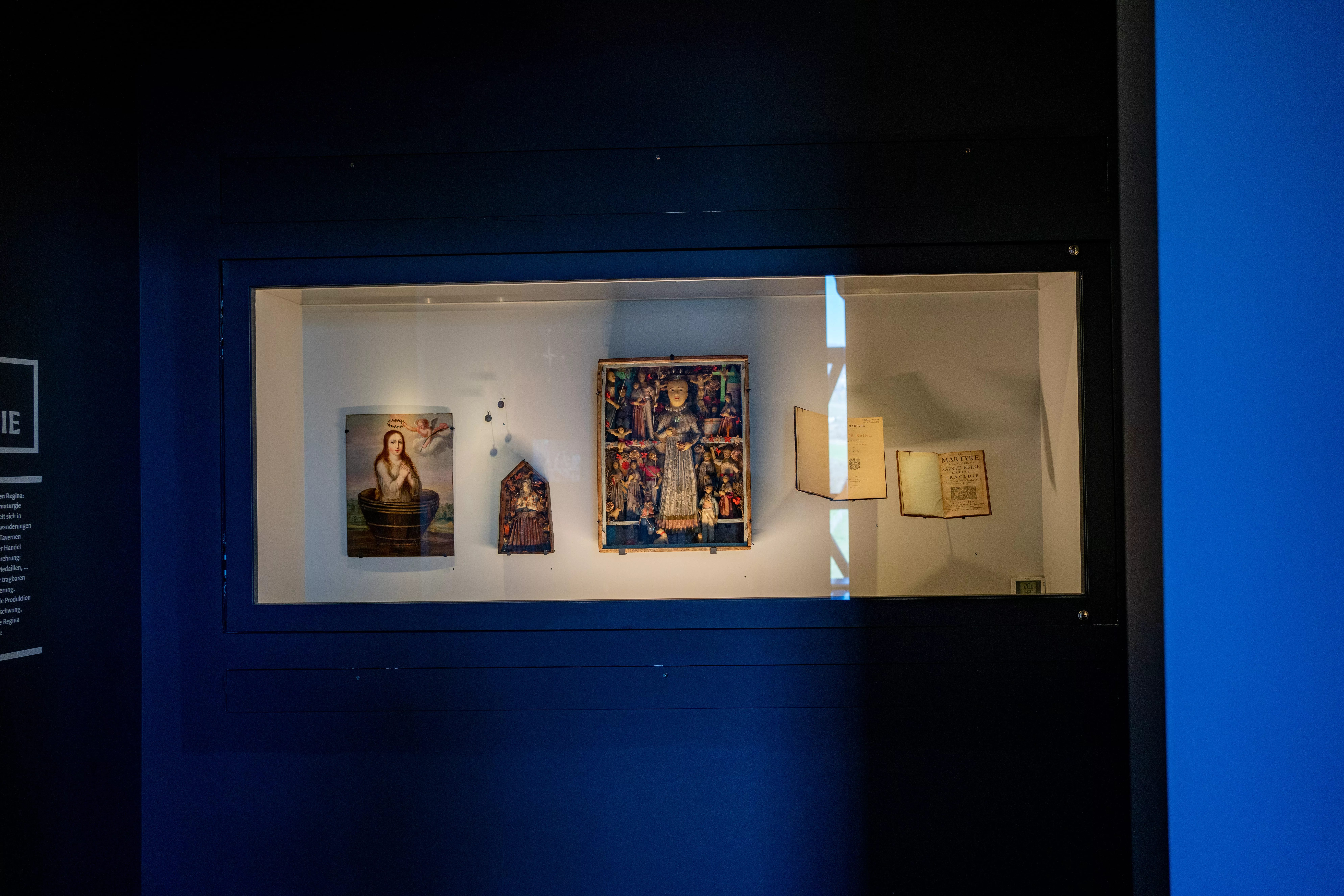
As the ancient town was gradually abandoned, the first Christian church, dating from the 5th century, was dedicated to Saint Reine near the former Roman theatre. Surrounded by a necropolis, this church may have remained in use until the 9th century, when the saint’s relics were transferred to nearby Flavigny. This marked the end of settlement at Mont-Auxois.
19th century
In the 19th century, scholars took an interest in the site of Alesia and unearthed the first significant remains there. Between 1861 and 1865, Emperor Napoleon III, who was working on a biography of Julius Caesar, ordered excavations around Mont-Auxois in search of the Roman camps from the siege. In 1865, he also had the famous statue of Vercingetorix erected, thereby helping to give rise to the Gallic myth.
20th century
From the early 20th century onwards, excavations intensified and gradually brought to light the remains of the Gallic and Gallo-Roman town: public monuments such as the theatre, the temple and its portico, the basilica, the square and its shops, as well as dwellings and craftsmen’s workshops. Successive research programmes, continuing to this day, regularly open up new horizons.